This is a comprehensive guide to manual sweepers. We will cover their range of applications, explain how they work, and discuss key factors to consider when making a purchase. Our goal is to help you make informed buying decisions, thereby enhancing your product variety and making it easier for your customers to choose the right items.
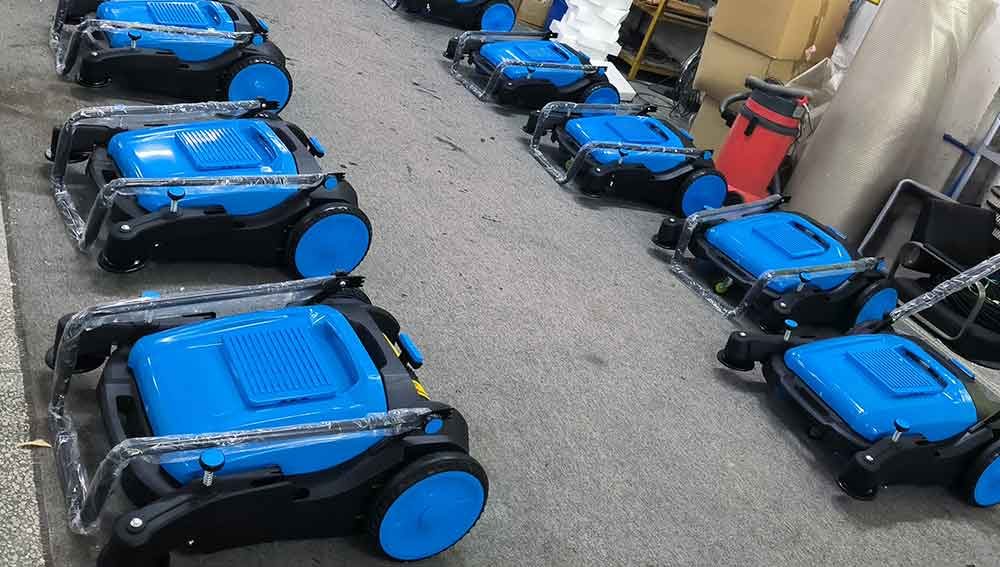
Table of Contents
ToggleThe concept of a manual sweeper:
A manual sweeper is a piece of cleaning equipment designed specifically for light-industrial or commercial environments—such as shopping malls—and is powered by human effort. It is engineered to efficiently collect and remove dirt, dust, debris, and various other types of waste from the surroundings. These machines feature a robust construction and offer excellent value for money, making them well-suited for daily cleaning requirements. Their core functions include:
Floor Sweeping and Dust Collection: Using mechanical brushes to clear debris from the floor, the equipment gathers this material while capturing fine dust particles to prevent them from dispersing into the air.
Waste Collection: Collected waste is stored within an integrated hopper or container, allowing for convenient subsequent removal and disposal.
Components of a Manual Sweeper and Their Operating Principles:
A manual sweeper consists of several key components (mechanical sweeping mechanisms) that work in tandem to enhance cleaning efficiency. Understanding these components provides insight into how such equipment functions.
Main Brush System:
The main brush is typically a rotary (cylindrical) brush located at the bottom of the machine. As the sweeper moves forward, the main brush rotates in the direction opposite to the machine’s travel, agitating the ground to loosen dirt and debris; these materials are then lifted and conveyed into the collection area.
Side brush:
These are small brushes located on either side of a manual floor sweeper. By rotating, they sweep debris inward toward the main brush, thereby extending the cleaning reach to edges, corners, and along walls.
Hopper:
This is a compartment on the equipment used to store collected debris (such as dust and waste). Debris enters the hopper—located inside the machine—by passing over the top of the brushes. The hopper is designed for easy removal and emptying of the collected debris.
Drive system:
This is the mechanism that enables the sweeper to move forward or backward. In the case of a JUNCHE manual (push-type) sweeper, the operator pushes the machine to propel it forward.
Pros and Cons of Manual Sweepers:
A manual sweeper (also known as a push-type or walk-behind sweeper) is a compact, agile, and easy-to-maneuver piece of cleaning equipment.
Pros:
High maneuverability: Thanks to its compact size, it can easily navigate through narrow spaces, aisles, and around obstacles.
Ease of use: Features simple controls and an intuitive design, making it easy to learn and operate.
Affordable: Generally less expensive than large ride-on sweepers, making it an ideal choice for small to medium-sized businesses.
Low maintenance: Contains fewer mechanical components, resulting in lower maintenance costs.
Cons:
Lower cleaning efficiency: Due to a slower operating speed and a narrower cleaning path, it is relatively less efficient when cleaning large areas.
Operator fatigue: Requires manual effort to push and operate, which can lead to operator fatigue during prolonged use.
Limited debris capacity: The dust container is relatively small, requiring more frequent emptying and reducing overall cleaning efficiency.
Applicable Environments and Scenarios:
Small Warehouses: Clearing debris from storage areas and loading/unloading docks.
Educational Institutions: Maintaining cleanliness and hygiene in schools, universities, and training centers.
Hospitality, Dining, and Event Venues: Keeping hotels, restaurants, and conference centers tidy.
Hospitals and Clinics: Ensuring a hygienic environment within medical facilities.
Leisure and Entertainment Facilities: Cleaning cinemas, theaters, and sports venues between events.
Retail Spaces: Cleaning floors in high-foot-traffic areas such as supermarkets, boutiques, and department stores.
JUNCHE manual sweepers are available in versions both with and without a specialized filtration system.
In summary, manual sweepers are ideally suited for small spaces and precision cleaning tasks, offering both excellent maneuverability and cost-effectiveness.
As a professional supplier of manual sweepers in China, JUNCHE is committed to providing high-quality, reliable cleaning solutions designed to meet the diverse needs of various industries.